Best SEO Content Brief Tools in 2026: Compared by Workflow, Output and Cost
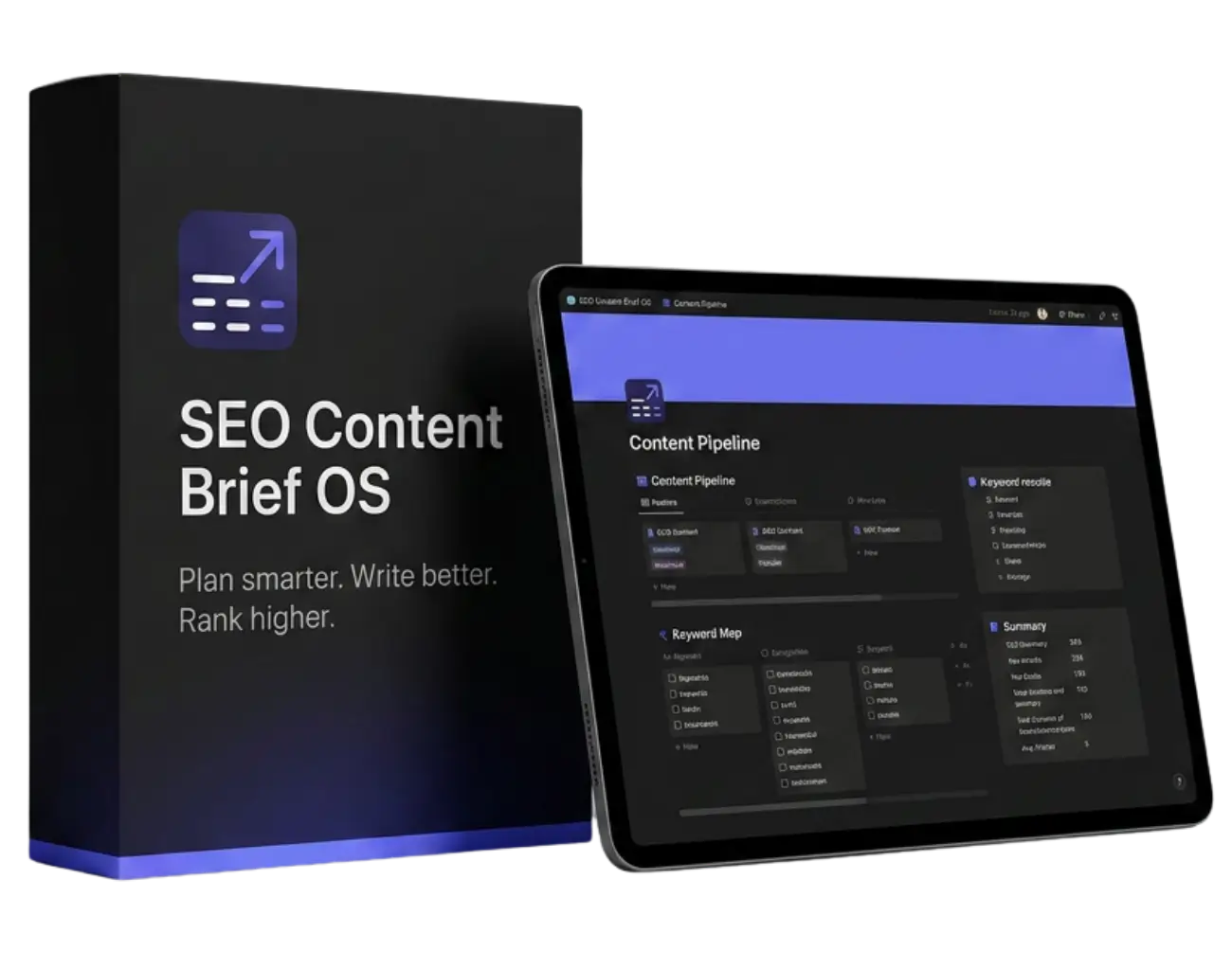
The best SEO content brief tools in 2026 fall into two groups: subscription platforms that pull SERP data and grade drafts (Frase, Surfer, Clearscope, MarketMuse, NeuronWriter), and workspace systems that organize research, briefs and approvals in one place (Notion-based systems such as SEO Content Brief OS). Most teams need one of each, or a clear reason to skip one.
Quick answer: Pick an SEO content brief tool by the job it must do. If you need SERP-driven term suggestions and draft scoring, choose a content optimization platform. If you need repeatable briefs, a visible pipeline, EEAT review and client handoff, choose a brief workspace. Freelancers and small agencies often get the best cost-to-output ratio by pairing a free or low-cost research tool with a one-time Notion brief system.
- List the jobs: research, brief writing, draft grading, approvals, refresh tracking.
- Decide which jobs need live SERP data and which need structure.
- Compare pricing models, not just monthly prices.
- Test the output: would a writer understand the brief without a call?
What Does an SEO Content Brief Tool Actually Do?
An SEO content brief tool turns a keyword into instructions a writer can follow. A useful brief states the search intent, the primary and secondary keywords, the angle, the outline, the evidence the article needs, the internal links to include and the review criteria. If you are new to the format, start with our guide to what an SEO content brief is.
Tools differ in where they spend their effort. Some automate the research layer: they read the top-ranking pages, extract headings and terms, and score your draft against them. Others focus on the operating layer: a database of briefs, statuses, owners, due dates, checklists and refresh dates. The mistake most buyers make is paying for the research layer when their real bottleneck is the operating layer, or the other way round.
The five jobs a brief workflow has to cover
- Research: SERP analysis, competitor headings, questions, keyword variants.
- Brief writing: intent, angle, outline, word count range, evidence and links.
- Draft grading: term coverage and readability checks against the SERP.
- Approvals: who reviews, what "done" means, EEAT sign-off.
- Refresh tracking: which published pages need updating and when.
SEO Content Brief Tools Compared
The table compares the tools most often shortlisted by freelancers and small teams. Pricing is described by model rather than exact figure, because vendor plans change frequently. Check each pricing page before buying.
| Tool | Best at | Brief output | Pricing model | Best for |
|---|---|---|---|---|
| Frase | Research to brief to draft in one app | Auto-generated outlines from SERP data | Monthly subscription | Writers who want research and drafting together |
| Surfer | Draft scoring and term coverage | Guidelines inside the editor | Monthly subscription | Teams optimizing many drafts |
| Clearscope | Clean content grading for editors | Term reports and grades | Monthly subscription, higher tier | Editorial teams with budget |
| MarketMuse | Site-level topic planning | Topic models and briefs | Free tier plus quote-based plans | Content strategists planning clusters |
| NeuronWriter | Low-cost SERP-based briefs | Terms, questions and competitor outlines | Low monthly subscription | Budget-conscious freelancers |
| SEO Content Brief OS (Notion) | Repeatable briefs, pipeline and EEAT review | 10-section brief template plus 7 AI prompts | One-time payment | Freelancers and agencies who want to own the system |
Content Optimization Platforms
Frase, Surfer, Clearscope and NeuronWriter all read the current search results and turn them into guidance. Their strength is speed: in a few minutes you see which headings competitors use, which entities appear repeatedly and how your draft compares.
Their limits are just as important. A SERP-based score measures similarity to what already ranks, not whether your page adds anything new. Google's guidance on helpful, people-first content rewards original information and first-hand experience, which no term list can supply. Use these platforms as a research input, not as the definition of a finished article.
When a subscription platform is worth it
- You publish or optimize a high volume of articles every month.
- Several writers need the same live scoring inside an editor.
- Clients expect a content grade as part of the deliverable.
Brief Workspaces and Notion Systems
A brief workspace answers different questions: Which briefs are in progress? Who owns them? Has the EEAT review been done? Which published articles need a refresh? Notion is popular for this because a single database can hold every brief, with views for pipeline, calendar and priority. See our Notion SEO template guide for how teams structure it.
SEO Content Brief OS is a Notion system built for this layer. It includes a Content Briefs database with 17 properties (keyword, search intent, status, priority, EEAT score, target country and language, refresh status and more), five views, a 10-section brief template, a library of 7 prompts for Claude, ChatGPT or Perplexity, a 24-item EEAT checklist and three completed example briefs. It does not replace live SERP scoring; it gives your research a consistent home and your writers a consistent brief.
How to Choose the Right SEO Content Brief Tool
- Find your real bottleneck. If writers keep missing the intent, you need better briefs. If drafts are thin on coverage, you need SERP research.
- Count yearly cost, not monthly. Twelve months of a mid-tier subscription is a different decision from a single payment. Our breakdown of what SEO tool subscriptions really cost shows how quickly it adds up.
- Check who reads the output. Writers, clients and editors all need to understand the brief without a meeting.
- Plan for AI search. Briefs should define the direct answer, the evidence and the entities the article must cover, so the finished page is easy for AI Overviews and ChatGPT to quote.
- Test with one real keyword. Build the same brief in two tools and hand both to a writer.
A practical stack for freelancers and small agencies
A setup that works for many small teams: free research sources (Google Search Console, the live SERP, Reddit and Quora threads), an AI assistant for first-pass analysis, a Notion brief system for structure and approvals, and an optimization platform only if draft grading is a client requirement. You can follow the full process in how to write an SEO content brief.
FAQ
What is the best free SEO content brief tool?
There is no single free tool that covers research, brief writing and approvals. A free MarketMuse tier, Google Search Console and an AI assistant can handle research, and a Notion template can hold the brief. Start with a free Notion brief template if budget is zero.
Can AI write the whole content brief?
AI can draft most sections quickly, but a human should confirm intent, the angle, the evidence and the internal links. AI drafts are a starting point, not a final brief.
Do I need Surfer or Frase if I use a Notion brief system?
Not always. If your clients do not require a content score, SERP research plus a structured brief and an EEAT review covers most of what matters. Add a grading tool when volume or client reporting justifies it.
Is SEO Content Brief OS a subscription?
No. SEO Content Brief OS is a one-time purchase that you duplicate into your own Notion workspace.
Turn Any Keyword Into a Writer-Ready Brief
SEO Content Brief OS is a Notion system with a 17-property brief database, a 10-section brief template, 7 AI prompts for Claude and ChatGPT, and a 24-point EEAT checklist. One-time payment, no subscription. Get SEO Content Brief OS — $37 one-time → Want the planning system and the automations together? See the Complete AI SEO Bundle.Ready to brief smarter?
Turn any keyword into an agency-grade content brief in 15 minutes. One-time payment.
GET THE COMPLETE BUNDLE — $37 →

